
Old house wiring may add character and history to a home, but it can also pose serious safety risks if it has not been properly maintained. Many properties throughout New Hampshire still contain original electrical systems that were not designed for modern appliances, higher energy demands, or today’s safety standards.
Understanding the types of old electrical wiring, how to identify them, and when to upgrade can help you protect your home and avoid costly repairs.
Why Old House Wiring Is a Serious Concern in New Hampshire
Electrical systems installed decades ago were built for a different era. Homes were once powered by a few lights and had small appliances. Today, we rely on HVAC systems, have large kitchen appliances, home offices, and smart technology.
Common issues with old-style house wiring can include:
- Overloaded circuits.
- Lack of grounding.
- Deteriorating insulation.
- Outdated electrical panels.
- Increased fire risk.
If your home was built before the 1980s and has not had a full electrical upgrade, it may be time for a professional inspection.
Types of Old Electrical Wiring Found in Older Homes
If your home was built before the 1980s, you likely have one of these types of old electrical wiring. Understanding what is behind your walls is the first step to preventing fire hazards and equipment failure.
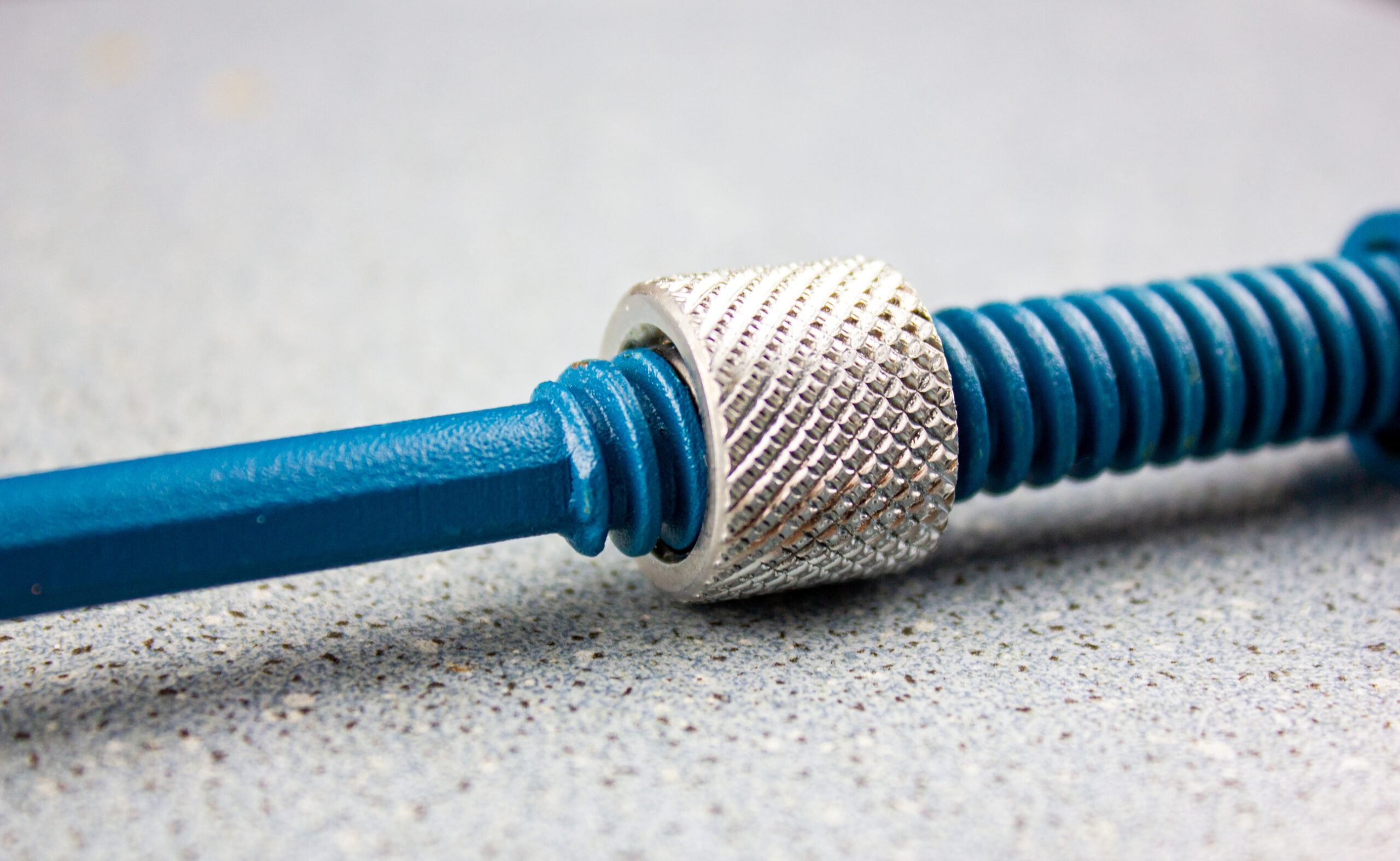
- Knob and Tube
Installed from the late 1800s through the 1940s, knob and tube wiring was once standard practice. Here’s how it works:
- Wires are supported by ceramic knobs.
- Ceramic tubes protect wires through framing.
- No grounding conductor is included.
- Insulation is typically cloth-based.
This system was effective for its time, but it lacks grounding and modern load capacity.
The Risk: It lacks a ground wire, meaning it cannot safely power modern three-prong appliances. Furthermore, it was designed to dissipate heat into open air, and when modern insulation is packed around it, it becomes a major fire risk.
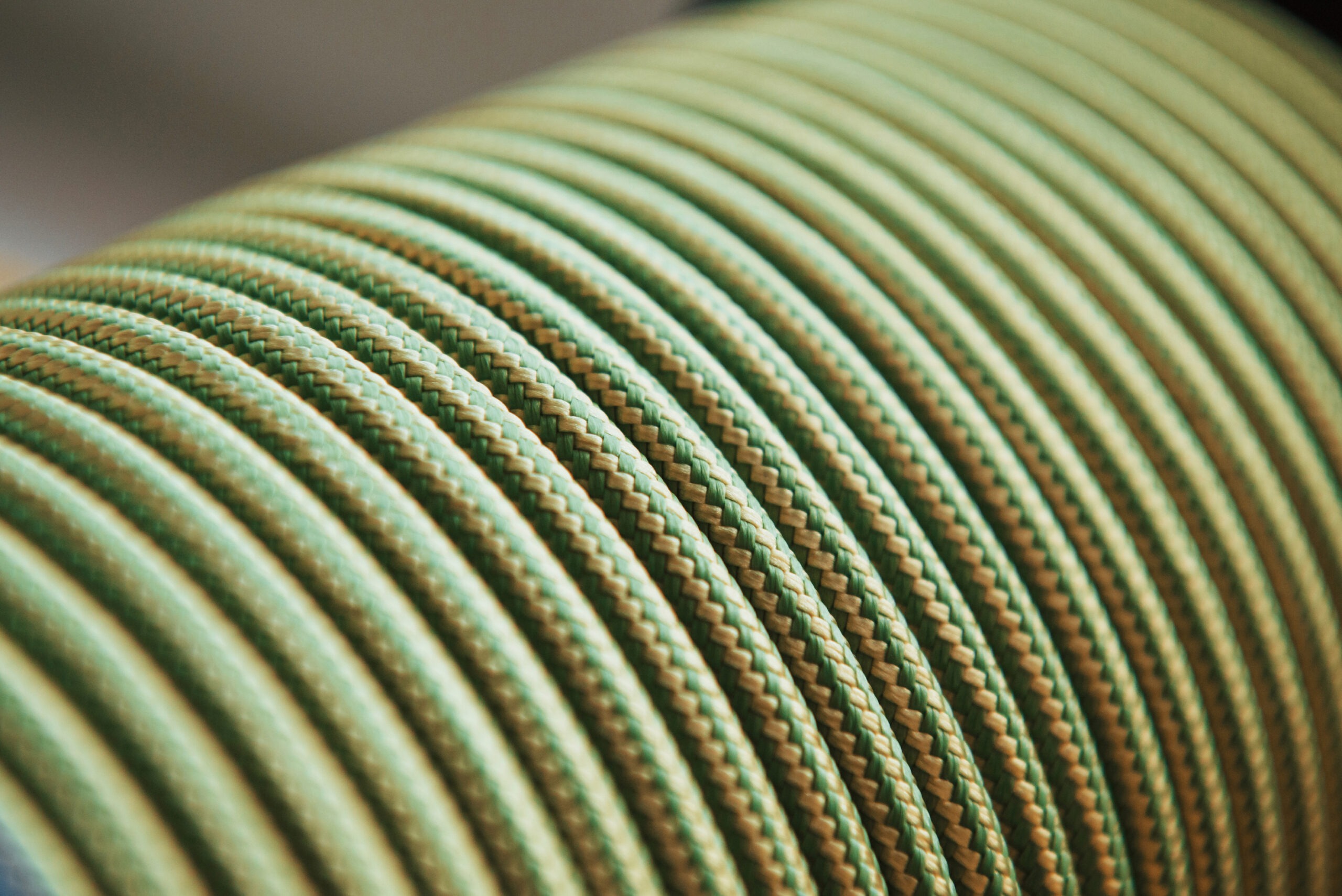
- Cloth-Jacketed Wiring
Cloth-insulated wiring often appears in homes built between the 1920s and 1960s. Over time, the fabric or rubber insulation may:
- Dry out and crack.
- Become brittle.
- Expose live conductors.
When insulation deteriorates, the risk of shorts and fire increases significantly.
The Risk: Over decades, the cloth becomes brittle and flakes away, leaving “hot” wires exposed. In the damp environment of the mountains, this can lead to short circuits or “arc faults.”
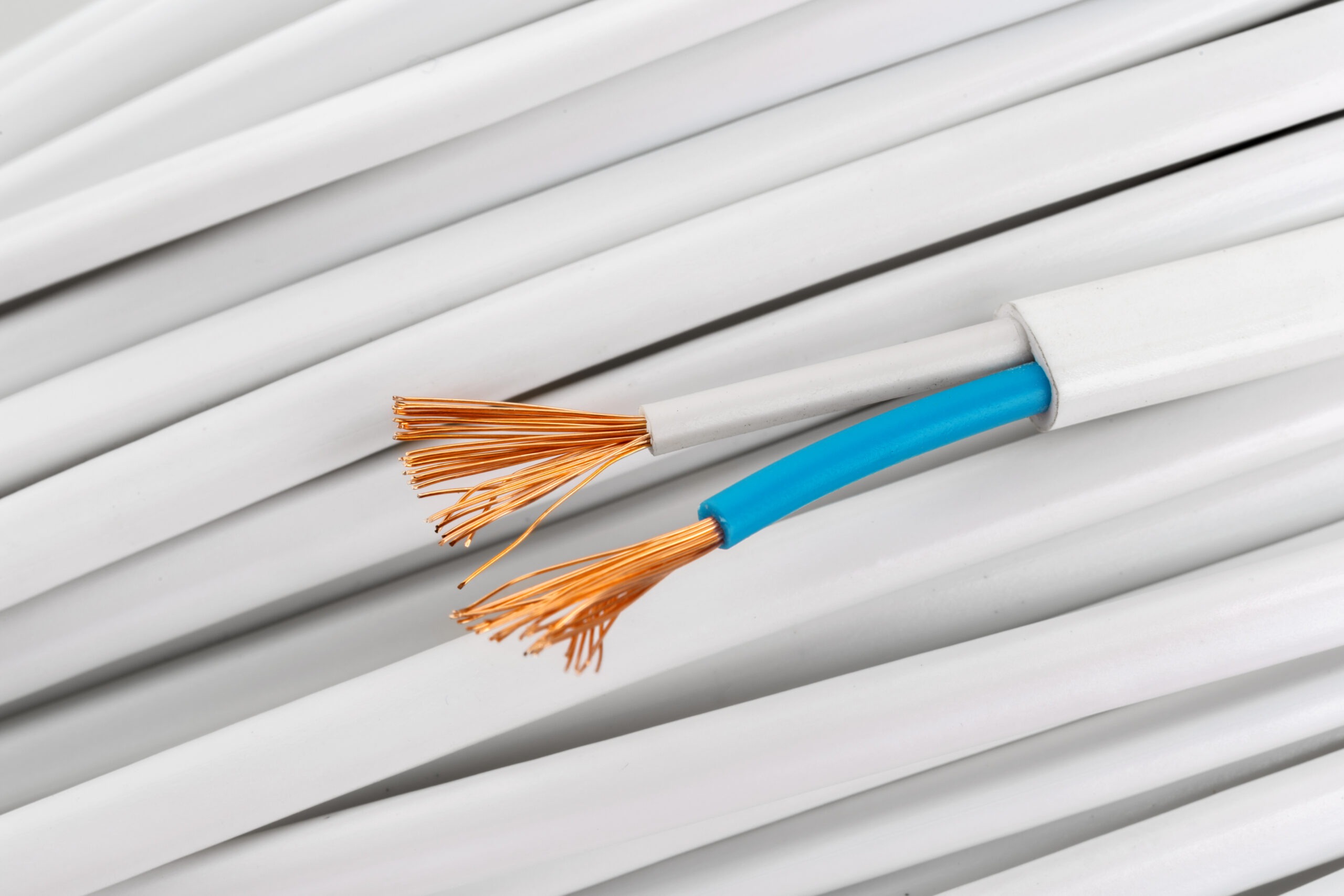
- Aluminum Wiring
Used primarily between 1965 and 1975, aluminum wiring became popular as a cost-saving alternative to copper. Common characteristics include:
- Lightweight, silver colored conductors.
- Higher expansion rate than copper.
- Greater likelihood of loose terminations over time.
Without proper connectors and maintenance, aluminum wiring can overheat at connection points.
The Risk: Aluminum expands and contracts more than copper, leading to loose connections at outlets and switches. These loose connections generate heat, a leading cause of electrical fires in older NH homes.
What Are the Common Problems With Old House Wiring?
Old house wiring was not designed for today’s electrical load. As homes add larger appliances, HVAC systems, and electronics, older systems often begin to show strain.
The most common problems include:
- Circuits that overload under modern demand.
- Lack of grounding protection.
- Deteriorated cloth or rubber insulation.
- Outdated fuse boxes with limited capacity.
- Unsafe DIY alterations from previous owners.
- Too few outlets, leading to overuse of extension cords.
These issues may develop slowly, but over time they increase the risk of overheating, shock, and electrical fires.
An Overview Of These Problems
| Problem | Why It Happens | Risk Level |
| Overloaded circuits | Modern appliance demand | High |
| No grounding | Older installation standards | Moderate to High |
| Insulation breakdown | Aging materials | High |
| Outdated fuse panels | Limited electrical capacity | Moderate |
| DIY wiring changes | Improper repairs | High |
Here Are The Signs Your Electrical System May Be Outdated
If you are unsure whether your home contains old electrical wiring, look for these warning signs:
- Frequently tripped breakers or blown fuses.
- Flickering or dimming lights.
- Warm outlets or switch plates.
- Two-prong outlets with no grounding.
- Burning odors near outlets or panels.
These symptoms often indicate that your system is struggling to handle current electrical demands.
What Are the Best Practices for Old House Wiring?
Not every older home needs a complete rewire. In many cases, strategic upgrades significantly improve safety and performance. A smart approach typically includes:
- Scheduling a professional electrical inspection.
- Evaluating panel capacity.
- Upgrading ungrounded outlets where possible.
- Securing aluminum wiring connections properly.
- Replacing visibly damaged components.
The Wolf Mountain Safety Check
One thing every old-style homeowner should do today is walk through their home and test their GFCI (Ground Fault Circuit Interrupter) outlets—those with the “Test” and “Reset” buttons, usually found in kitchens and bathrooms:
- Press the Test button. The Reset button should pop out, cutting power to the outlet.
- Use a small lamp to verify that the power is off.
- Press Reset to restore power.
If the button doesn’t pop or the power stays on, the outlet is faulty or improperly wired. In older homes, these are often missing entirely or “bootlegged” into ungrounded circuits.
Give Wolf Mountain a call if your outlets fail this test.
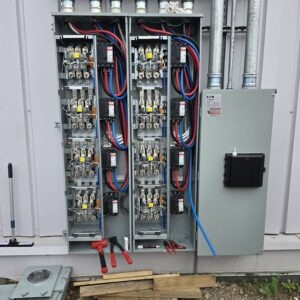
Is Your Home Mountain-Ready?
Don’t wait for flickering lights or a burning smell to address your old house’s wiring. Whether you are looking to install a whole-home generator, upgrade a vintage electrical panel, or simply ensure your family is safe during the next big storm, Wolf Mountain is here to help.
We pride ourselves on providing clear, practical advice and professional installations for our neighbors in Washington, NH, and nearby areas.
Ensure your home is safe and code-compliant. Contact the Wolf Mountain team today to schedule an electrical safety inspection.
FAQs
How do I know if my house has old wiring?
The fastest indicators are two-prong outlets, a 60-amp or 100-amp panel, or visible knob-and-tube or cloth-covered wiring in the basement or attic. However, the only reliable way to confirm the types of electrical wiring in your home is through a professional electrical inspection.
Wolf Mountain provides comprehensive inspections to identify outdated systems and safety concerns.
Is old house wiring automatically dangerous?
Not always. Some older systems can continue functioning safely if they are in good condition and properly maintained. The risk increases when wiring is damaged, overloaded, ungrounded, or modified improperly. A professional inspection is the best way to determine whether your system is safe.
How do I know what type of wiring is in my old house?
The age of your home offers clues, but the only reliable way to confirm the type of wiring is through a visual inspection by a licensed electrician. Knob and tube wiring, aluminum wiring, and cloth-insulated wiring each have distinct characteristics that a trained professional can identify safely.
What are the common problems with old house wiring?
Old house wiring often cannot handle modern electrical demands. Common problems include overloaded circuits, poor grounding, deteriorating insulation, outdated fuse panels, and loose aluminum connections. Some homes also have unsafe DIY modifications or too few outlets, leading to overuse of extension cords.
These issues increase the risk of overheating, electrical shock, and fire, especially if the system has not been professionally inspected.